


A day at the Groves
You gonna a be a great addition to our team for the day! And we will be happy to share all the knowledge we have with you.
Contact us in order to see if there are any ongoing jobs at the groves that you can hop on. You can ride with us or meet us there and take part, for as long as you feel like, on pruning, harvest or any other job that might be taking place.
Spend a day or some hours in our boots and come closer to South Pelion magical nature and to the greek "sacred" tree.
A field work calendar to help you

Fertilizing
In winter we fertilize organically the soil, with manure or other organic options, according to the needs of each plot. In order to do that we have to take into account the total amount of fruits we harvested and the severity of the pruning. Of course all healthy pruning remainants are staying on the soil and are getting mulched in order to reduce the Carbon Dioxide emmisions and recycle their nutrients. Winter is chosen for fertilization because the fertilizers need to be desolved by water which is only availabe during winter and spring months since we are talking about rain fed trees.

Pruning
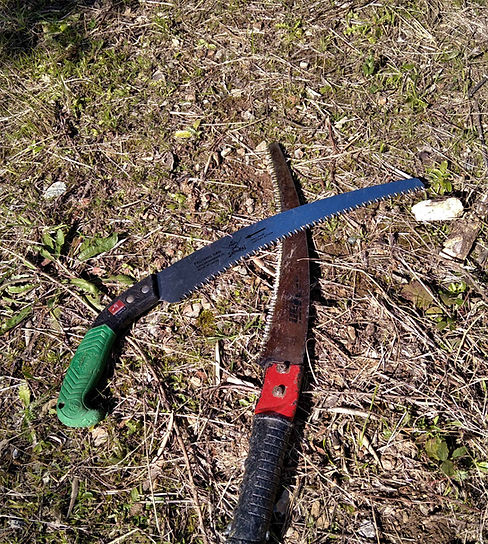
December to March is preffered for prunning. The cold weather doesn't allow the deseases to spread easily and also makes us more energetic in order to warm up! What to we try to do is to maintain a fair percentage of the canopy without removing too much wood. Mainly we remove the older stems (3+years old) that are on the lower part of the tree and covered by the younger and more productive ones. We also try to achieve good sun penetration in the whole canopy and balance between the canopy and future fruits in order to reduce the alternate bearing. If you wish to learn more about the prunning techniques or wanna come by and learn how to prune yourself drop us a message.

Pest control against Olive moth
During the Spring months(April to May) the plots are closely scanned every couple of days to see the level and progress of floresence. When 5% to 15% of the flowers have bloomed we are spraying against the 1st generation of olive moth in case there is an increased population. We use Bacillus thuringiensis a bacteria which ultimately kills the olive moth.

Pest control against Dacus Oleae
The main enemy of olive groves which is extremelly harmfull for the olive fruit and the olive oil quality. Depending on the weather conditions we may encounter many generations of the olive fly. Mainly we start by spraying in July with kaolin a fine grounded natural mineral which keeps the fly away and at the same time protects the tree from heat stress. Depending on the number and intensity of summer rainfalls we might need to repeat the sprayings up to a month prior to harvest(September). For the time being we are taking into consideration using extract of wild thyme and other naturall insect repellants.

Harvesting
The most fun and rewarding part of the circle as everything comes down to it. Its an early harvest in October and early November where the olives are mainly green. The harvest is done in a mix of traditional and more modern techniques, with bamboo sticks and modern electrical rods.

Plant protection from diseases
When the undergoing jobs produce wounds on the trees or the weather boost the growth of harmfull bacterias and fungus we need to act fast in order to stop possible infections or population increase. So what we do is spray with organic options as Cooper and Sulfur depending on the occasion and some times those actions can synchronize with other sprayings to be done.